
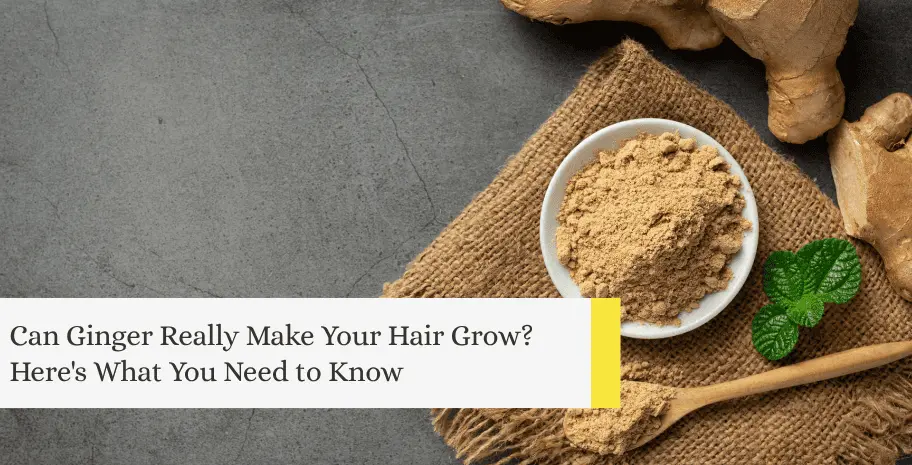
You've probably heard this before: "Want thicker hair? Just rub some ginger on your scalp!"
Maybe it came from your mum, an auntie who swears by traditional remedies or that one TikTok video showing someone rubbing ginger all over their hairline.
And honestly, when ginger is already sitting in your kitchen (or NSK), why not give it a try?
But can 🫚ginger really make your hair grow?
Well, here's a surprise. While ginger has been used in traditional hair care for generations, scientific research hasn't actually proven that it stimulates hair growth.
So, before you start blending ginger from your fridge that should be saved for your chicken rice, here's what you should know.
Why Is Ginger So Popular for Hair Growth?

Ginger's reputation comes from traditional remedies and its natural plant compounds, rather than proven hair-regrowth results.
Think about it. Ginger is practically everywhere in Malaysian households.
We use it in cooking, ginger tea, herbal drinks and traditional remedies. Naturally, it's also found its way into hair masks, shampoos and scalp treatments.
Ginger, scientifically known as Zingiber officinale, contains compounds that researchers find interesting:
- Gingerols: Natural compounds studied for their antioxidant and anti-inflammatory properties.
- Shogaols: Related compounds that become more prominent when ginger is dried or heated.
A 2019 scientific review published in Foods discusses these compounds and their potential health-related properties.
Sounds promising, right?
Here's the catch: just because an ingredient has antioxidant properties doesn't automatically mean it can make your hair grow faster.
And the actual hair-growth research tells a rather unexpected story.
What Does Science Actually Say About Ginger and Hair Growth?
There's currently no convincing clinical evidence that ginger stimulates hair regrowth in humans. Some laboratory research even suggests the opposite.
Wait, really?
Yes. The same ingredient people recommend for growing hair has produced some surprising research findings.
The 2013 Study That Challenged Ginger's Hair-Growth Reputation
In 2013, researchers published a study in PLOS ONE investigating 6-gingerol, one of ginger's main active compounds.
They tested its effects on cultured human hair follicles, hair-follicle cells and mice.
Here's what they found:
Study Group | Hair Growth Over 7 Days |
Untreated human hair follicles | 1.48 mm |
Follicles exposed to 6-gingerol | 1.06 mm |
Difference | Approximately 28% less growth |
That's right. In this particular laboratory experiment, hair follicles exposed to 6-gingerol showed approximately 28% less hair-shaft growth than the untreated group.
Does That Mean Ginger Shampoo Causes Hair Loss?
No, so please don't throw away your ginger shampoo just yet!
The researchers tested an isolated ginger compound at specific concentrations under laboratory conditions.
They weren't studying people washing their hair with ginger shampoo, two different things!
A commercial shampoo contains various ingredients and is usually rinsed off after a short period.
What this study tells us: Ginger isn't a scientifically established hair-growth treatment, but the findings don't prove that everyday ginger shampoos cause hair loss either.
What Can Ginger Actually Do for Your Scalp?

Ginger contains interesting natural compounds, but the benefits of ginger-based hair products depend on how they're formulated.
Imagine coming home after spending the whole afternoon under the blazing sun.
Your roots are greasy, your scalp feels sweaty, and all you want is a good hair wash.
At that moment, you're probably more concerned about feeling fresh than growing an extra centimetre of hair.
That's where a good ginger-based shampoo can come in.
1. Ginger Contains Antioxidant Compounds
Gingerols and shogaols have shown antioxidant activity in scientific research.
A 2019 review of ginger's bioactive compounds discusses their potential biological effects, including antioxidant and anti-inflammatory activity.
However, these findings don't prove that applying ginger to your scalp prevents hair loss or speeds up growth.
2. Ginger Has Been Studied for Anti-Inflammatory Properties
Ginger compounds have also been studied for their ability to influence inflammatory processes.
But before you start treating ginger as a cure for every itchy scalp problem, remember that laboratory findings don't necessarily translate into proven scalp benefits.
There's insufficient clinical evidence that ginger shampoo treats dandruff, scalp inflammation or alopecia.
3. Ginger Shampoos Can Still Help Keep Your Hair Fresh
Here's where things get more relatable.
A properly formulated ginger shampoo can help:
- Wash Away Excess Oil: Handy when your roots turn greasy in Malaysia's humid weather.
- Remove Daily Buildup: Cleanses away sweat, dirt and leftover styling products.
- Keep Hair Manageable: When paired with conditioner, helps your strands feel softer and easier to style.
These benefits come from the shampoo's complete formulation, including its cleansing and conditioning ingredients.
Is Rubbing Raw Ginger Juice on Your Scalp a Good Idea?

DIY ginger juice isn't a proven hair-growth treatment, and applying it directly to your scalp may cause irritation.
You've probably seen those tutorials.
- Grate some ginger
- Squeeze out the juice
- Rub it onto your scalp
- Leave it there.
Sounds easy enough, even if it’s kinda gross. \(〇_o)/
But your scalp isn't a cooking experiment.
Why You Should Be Careful With DIY Ginger Treatments
Fresh ginger juice might seem harmless because it's natural, but there are a few things worth considering:
- Burning or Stinging: Concentrated ginger juice may irritate sensitive skin.
- Redness or Itching: Some people may react badly to direct application.
- Unpredictable Strength: The concentration of ginger compounds varies between homemade preparations.
- No Proven Dosage: Researchers haven't established a safe and effective ginger-juice routine for hair regrowth.
And here's something worth remembering: a tingling scalp doesn't mean your hair follicles are suddenly growing faster.
What Actually Helps Support Healthy Hair Growth?
If you've been scrolling through hair-growth TikTok long enough, you'll notice there's always another miracle ingredient.
Ginger today, rosemary oil tomorrow, some homemade serum next week.
But before trying another remedy, ask yourself: What's actually happening to my hair?
Match Your Hair Problem to the Right Solution
Hair Concern | What May Help |
Oily roots and scalp buildup | Regular cleansing with a suitable shampoo |
Dry, rough or damaged hair | Conditioner and gentler styling |
Hair breakage | Less heat, bleaching and pulling |
Increased shedding after illness or stress | Identifying and addressing the trigger |
Gradually widening hair part | Professional assessment for possible pattern hair loss |
A Few Hair-Care Habits That Actually Make Sense
According to the American Academy of Dermatology, everyday habits can help reduce unnecessary hair damage.
Nothing too complicated, thankfully.
- Condition After Shampooing: Helps reduce tangles and breakage.
- Be Gentle With Wet Hair: Avoid tugging through knots.
- Reduce Excessive Heat: Give your straightener a break occasionally.
- Loosen Tight Hairstyles: Constant pulling can damage your hairline.
- Eat Balanced Meals: Your hair needs adequate protein and nutrients to grow normally.
What About Actual Hair-Growth Treatments?
If you're dealing with genuine hair thinning, some treatments have stronger scientific evidence than ginger.
For example, topical minoxidil is a medically recognised treatment for certain types of pattern hair loss.
The American Academy of Dermatology notes that visible results can take around 6 to 12 months, and continued treatment is usually needed to maintain the benefits.
Of course, not every type of hair loss requires minoxidil.
If your ponytail keeps getting smaller, your parting looks wider or you're experiencing unusual shedding, a dermatologist can help identify the cause before you spend money on another treatment.
Give Your Hair Some Ginger-Inspired TLC With KA’FEN
Just because ginger isn't scientifically proven to regrow hair doesn't mean it can't have a place in your hair-care routine!
Meet our Ginger Hair Shampoo and Conditioner, a ginger-infused duo designed to keep your scalp fresh and your hair feeling soft, smooth and healthy-looking.
KA’FEN Ginger Shampoo: For Fresh, Clean Roots

After a long day of commuting, sweating and surviving Malaysia's humidity, there's nothing better than a refreshing hair wash.
Our Ginger Shampoo combines ginger extract with a moisturising formula for everyday scalp and hair care.
Here's what you'll love:
- Root Care: Helps maintain stronger, healthier-looking hair.
- Deep Scalp Cleansing: Removes excess oil, sweat and daily buildup.
- Moisturising Care: Leaves hair feeling clean without unnecessary dryness.
- Lemongrass Fragrance: Gives your hair a refreshing, pleasant scent.
KA’FEN Ginger Conditioner: For Softer, Smoother Hair

Oily roots but dry, tangled ends? We've all been there.
Our Ginger Conditioner combines ginger extract, amino acids and conditioning ingredients to give your lengths some much-needed TLC.
What it offers:
- Nourishing Care: Helps improve the feel of dry, damaged strands.
- Less Breakage: Helps reduce tangling and friction-related breakage.
- Softness and Shine: Leaves hair smoother, glossier and easier to manage.
The duo comes in 250ml and 760ml sizes and is listed as JAKIM halal-certified on our official product page.
How to Use?
- Wet hair thoroughly.
- Massage Ginger Shampoo gently into your scalp.
- Lather and rinse well.
- Apply Ginger Conditioner to your mid-lengths and ends.
- Leave for 2–3 minutes, then rinse thoroughly.
No ginger to grate, no messy DIY mixtures, just an easy hair-care routine!
Frequently Asked Questions About Ginger Hair Growth
Does Ginger Really Make Hair Grow Faster?
Not according to current clinical evidence. A 2013 laboratory study even found that 6-gingerol slowed hair growth in cultured follicles. However, this doesn't mean ordinary ginger shampoos have the same effect.
Why Am I Losing More Hair After Using Ginger Shampoo?
It could be normal shedding during washing, irritation or an unrelated hair-loss condition. Ginger shampoo shouldn't automatically cause increased shedding. If you notice persistent hair fall or scalp discomfort after switching products, stop using it and seek professional advice.
Can Ginger Shampoo Help With Dandruff and an Itchy Scalp?
Some users report feeling less itchy after using ginger shampoos, but ginger itself isn't a proven dandruff treatment. Persistent dandruff may require shampoos containing established anti-dandruff ingredients such as ketoconazole.
Is It Normal for Your Scalp to Burn After Applying Ginger Juice?
No, burning isn't a sign that your hair follicles are growing faster. Raw ginger juice and concentrated ginger oils can irritate the skin. Wash the product off if you experience burning, redness or discomfort.
Can You Use Ginger Shampoo Every Day?
It depends on your scalp, hair type and the shampoo's formulation. If your roots get oily quickly in Malaysia's humid weather, frequent washing may suit you. However, reduce use if your scalp becomes dry or irritated.
Is Ginger Shampoo Better Than Regular Shampoo for Hair Growth?
Not necessarily. Ginger hasn't been clinically proven to stimulate hair growth, so a ginger shampoo isn't automatically better than a regular shampoo. Choose based on your scalp condition, hair needs and how well the formula suits you.