
Key Takeaways
- Humid air does not automatically make hair soft or well moisturised.
- Oily roots and dry ends should be treated as separate concerns.
- Conditioner, leave-in care and a light serum usually work better than oil alone.
- Product weight should match your hair thickness, porosity and level of damage.
- A good Malaysian hair routine should account for sweat, air conditioning, rain and frequent washing.
Malaysia’s weather has a special talent for making your hair feel dry, oily, frizzy and flat, sometimes all before lunch.
It sounds confusing. After all, how can hair feel dry when the air is already full of moisture? Doesn’t really make sense right?
Yet, the answer is that humidity does not automatically mean healthy, hydrated hair.
It’s the stuff hair care gurus and hair care brands don’t tell you, but throughout this article, you will learn how to keep your hair moisturised in Malaysia's hot and humid climate.
Why Is My Hair Dry Despite Malaysia’s Humidity?
Hair can still feel dry in humid weather because moisture in the air does not properly condition the hair or repair damage.
Humidity simply means there is more water vapour in the surrounding air. That moisture can move into the hair shaft, especially when the outer cuticle is raised or damaged. However, this does not automatically make the hair softer or healthier.
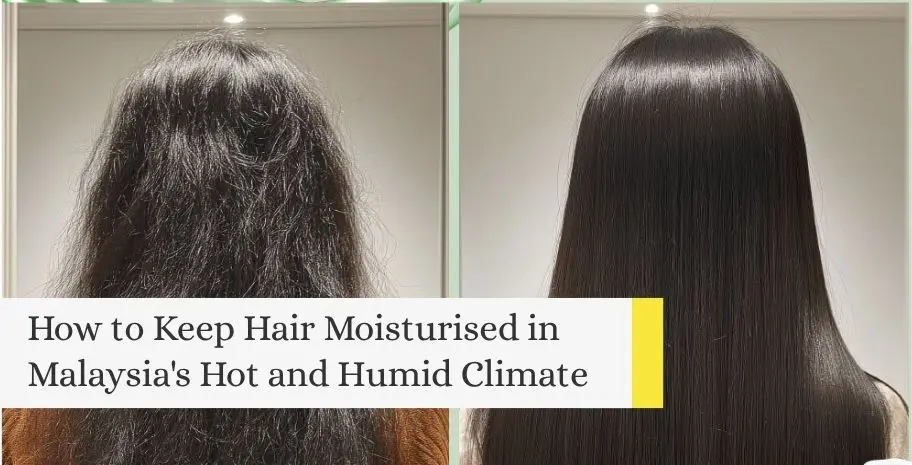
In fact, porous hair may absorb moisture from humid air, swell and become frizzy. Several everyday habits can also contribute to dry hair in Malaysia:
- Washing frequently after sweating
- Bleaching, colouring or rebonding
- Using hairdryers, straighteners or curling tools
- Spending long hours in air-conditioned rooms
- Rubbing wet hair with a rough towel
- Swimming in chlorinated pools
- Wearing helmets or hijabs that create friction
This is why oily roots and dry ends can exist at the same time. The scalp produces oil and collects sweat, while the mid-lengths and ends receive less natural oil and may already be damaged.
Is Your Hair Dry, Damaged or Just Overloaded?
Before buying another moisturising product, work out what your hair is actually trying to tell you. Because administering the cure without knowing the symptoms is a bad idea.
| Hair concern | What it usually feels or looks like |
|---|---|
| Dry or under-conditioned hair | Rough, tangled or stiff, but usually feels better after conditioner or a leave-in product |
| Humidity-related frizz | Looks relatively smooth indoors but expands, puffs up or loses definition outside |
| Product buildup | Feels coated, dull, flat or strangely dry, and may take longer to become fully wet |
| Chemically damaged hair | Feels weak, overly stretchy when wet or prone to snapping, and struggles to stay soft |
| Protein overload | Feels hard, brittle or straw-like after frequent keratin or protein-heavy products |
These problems can look similar, but they do not need the same solution.
For dry hair, add conditioner, leave-in care or an occasional moisturising mask.
For humidity-related frizz, use lightweight leave-in care, a smoothing serum and gentler drying techniques.
For buildup, use a clarifying shampoo occasionally when the hair feels coated, then follow with conditioner.
For chemically damaged hair, condition regularly, reduce high-temperature styling and consider a strengthening or bond-supporting treatment.
For unexplained stiffness, pause the newest product and see whether your hair improves after several normal washes.
Does Air Conditioning Affect Hair?
Yes, long periods in air-conditioned spaces can make hair feel drier, rougher and more prone to static or tangling.
If you’re an office worker or a mall-goer, you will often move from hot, humid outdoor air into a cool, dry office, shopping centre or car, then back outdoors again.
Porous or damaged hair may react to these constant environmental changes by absorbing and releasing moisture more readily.
“This can make hair feel soft in the morning, rough by lunch and frizzy by the time you reach home, and then soft again after shower.”
To reduce dryness caused by air conditioning, you can do the following:
- Apply conditioner after shampooing
- Use a leave-in product on damp hair
- Focus serum or oil on the ends
- Avoid repeatedly wetting the hair without conditioning it
- Reduce excessive heat styling before spending the day indoors
- Tie hair loosely rather than tightly when possible
While you can't beat Malaysia's hot and humid weather, you can at least cope with it.
How Should You Layer Moisturising Hair Products?
Apply products from lighter, water-based formulas to heavier products that smooth and seal the hair.
A simple order is:
- Shampoo the scalp
- Condition the lengths
- Apply a leave-in product to damp hair
- Smooth a small amount of serum or oil over the ends
- Use heat protection before styling
Leave-in conditioner adds softness and manageability while serum or oil helps reduce friction and excessive moisture movement.
Important: Start with a small amount. Too much product buildup and you can make your hair feel very greasy.
How Can You Control Frizz Without Making Hair Greasy?
Use lightweight hydration and keep heavier products away from the roots.
Helpful habits include:
- Drying hair with a microfibre towel or soft T-shirt
- Avoiding aggressive rubbing
- Detangling gently with a wide-tooth comb
- Applying leave-in products while hair is still damp
- Using a small amount of anti-humidity serum
- Reducing unnecessary heat styling
- Applying heat protectant before blow-drying
- Sleeping on a smoother pillowcase if friction is a problem
If you have fine hair, use sprays, milks and lightweight serums.
For thicker, curly or damaged hair, creams and richer leave-ins may work better.
Some frizz is normal in tropical weather, again you can’t beat Malaysia’s rice cooker weather but you can manage to tame it. Just don’t expect a miracle during a thunderstorm.
What Hair Routine Works Best in Malaysia?
For fine or oily hair
- Shampoo as needed
- Apply lightweight conditioner to the ends
- Use a leave-in spray
- Add a small amount of serum
- Clarify occasionally when hair feels coated
For dry, thick or curly hair
- Use a gentle shampoo on the scalp
- Apply a richer conditioner
- Use a mask weekly or fortnightly
- Apply leave-in cream to damp hair
- Seal the ends with a light serum or oil
For bleached or chemically treated hair
- Choose a gentle shampoo
- Condition after every wash
- Use an occasional strengthening or bond-supporting treatment
- Apply leave-in conditioner
- Use heat protection
- Reduce high-temperature styling
If this is a little too much to remember, just know the order is:
- Clean the scalp when needed.
- Condition the lengths after washing.
- Protect the hair.
- Reset with clarifying wash when buildup.
When Is Moisturising Not Enough?
Moisturising products are not enough when the issue involves scalp disease, severe breakage or unusual hair shedding.
This is more common than many people realise. A global analysis of 121 studies covering more than 1.26 million people estimated that seborrhoeic dermatitis, an inflammatory condition that commonly affects the scalp, occurs in around 4.38% of the population worldwide.
In that case, please seek help from a dermatologist because honestly no hair care product in the world can fix that.
Seek professional advice if you experience:
- Sudden or excessive shedding
- Bald patches
- Persistent itching
- Redness, swelling or sores
- Severe flaking or scaling
- Painful bumps
- Hair breaking close to the scalp
- Symptoms that continue despite changing products
Keeping Your Hair Moisturised With KAFEN

If your hair feels rough, it likely needs more moisture and gentler care.
If it feels heavy or greasy, try reducing product buildup.
And if your hair turns frizzy as soon as you step outside, choose products that smooth your strands and help protect them from humidity without making your hair feel weighed down.
To give your hair the care it deserves, try Kafen Ginger Conditioner. Enriched with ginger and lemongrass extracts, it helps deeply moisturise, repair damaged hair, tame frizz, and leave your hair smoother, shinier, and easier to manage while locking in lasting hydration.

Frequently Asked Questions About Moisturised Hair in Malaysia
Why Is My Hair Dry Even Though Malaysia Is Humid?
Humidity can cause porous hair to absorb water and become frizzy, but it does not properly condition the hair. Frequent washing, heat styling, chemical treatments and air conditioning can still leave hair dry.
How Often Should I Wash My Hair in Malaysia?
Wash according to your scalp condition. Daily washing may be suitable for sweaty or oily scalps, provided you use a suitable shampoo and condition the lengths.
Does Air Conditioning Dry Out Hair?
Yes, long periods in air-conditioned environments can make hair feel rougher, especially if it is bleached, long or highly porous.
Is Hair Oil Enough to Moisturise Hair?
Not usually. Hair oil can coat the hair surface, improve slip and reduce friction or moisture loss, but it does not replace the conditioning ingredients found in a rinse-out conditioner or water-based leave-in product.
What Is the Best Routine for Humid Weather?
Use shampoo based on scalp needs, condition the lengths, apply a lightweight leave-in and finish with a small amount of serum or oil on the ends.
How Do I Know If My Hair Has Product Buildup?
Hair with buildup may feel coated, dull, heavy, flat or difficult to wet. An occasional clarifying shampoo may help.