

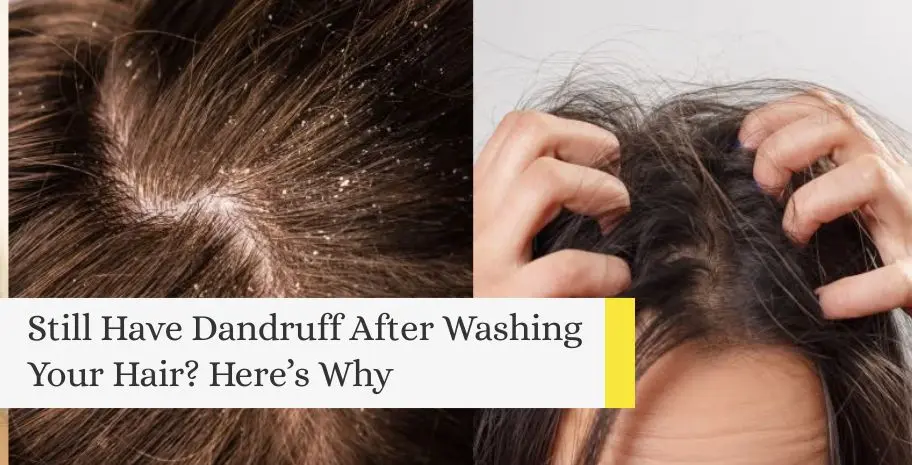
You have just washed, conditioned and dried your hair, only to notice flakes sitting along your parting or falling onto your shoulders. It can feel confusing, especially when your hair is freshly cleaned.
The good news is that dandruff after washing your hair does not automatically mean your scalp is dirty or that you did a bad job shampooing. Washing may remove oil, but it does not always address what is causing your scalp to keep shedding.
Those little white specks may also be caused by dryness, irritation or product buildup rather than dandruff.
So before you blame your hair shampoo for doing a poor job, let’s explain what’s really going on.
Why Do I Still Have Dandruff After Washing My Hair?
Dandruff can remain visible after washing because shampooing removes existing flakes without necessarily treating the scalp condition producing them.
Dandruff itself is also extremely common, with research estimates suggesting that it affects up to around 50% of adults worldwide at some point.
If you have dandruff, you may need a shampoo containing the following ingredients:
- Ketoconazole
- Selenium sulphide
- Salicylic acid
- Piroctone olamine
All of this depends on the main issue of your dandruff cause. Mild dandruff may improve with regular gentle washing, but more stubborn symptoms can require a medicated or anti-dandruff shampoo.
What Are Your Flakes Trying to Tell You?
Not every flaky scalp looks or feels the same. Paying attention to the appearance and location of the flakes can help you choose a more suitable next step.
| What You Notice | What It May Suggest | What to Check |
|---|---|---|
| Fine, powdery white flakes | Dryness or irritation | Hot water, harsh shampoo or frequent washing |
| Larger flakes with an oily scalp | Dandruff or seborrhoeic dermatitis | Anti-dandruff shampoo and scalp oiliness |
| Flakes around the hairline | Product residue or irritation | Hair dye, oils, gels or incomplete rinsing |
| Flakes after blow-drying | Dryness or loosened existing flakes | Heat setting and scalp sensitivity |
| Sticky particles around the roots | Product buildup | Dry shampoo, conditioner or styling products |
| Thick or clearly defined scaly patches | A condition other than ordinary dandruff | Professional scalp assessment |
“A 2024 systematic review covering more than 1.26 million people estimated the pooled global prevalence of seborrhoeic dermatitis at 4.38%, rising to 5.64% among adults.”
Note, this isn’t exactly a definitive diagnostic test, but it can help you avoid treating every flake in exactly the same way.
You May Be Rinsing the Shampoo Off Too Quickly
We are all guilty of rushing through a hair wash, especially on busy mornings. But most anti-dandruff shampoos need a little time on the scalp before being rinsed away. Here's what you should do instead:
- Apply the shampoo directly to your scalp
- Gently massage your scalp and spread it across evenly
- Follow the contact time stated on the product label.
Depending on the formula, dermatologists may recommend leaving dandruff shampoo on the scalp for several minutes (usually 3-5 mins).
The correct timing varies, so the label should always be your main guide.
The Flakes May Be More Visible Once Your Hair Dries
Sometimes washing loosens existing flakes without fully removing them. They may stay close to the scalp while your hair is wet, then become more noticeable once the roots dry and separate.
Blow-drying can also move loose flakes from the scalp onto the hair. If the air is very hot, it may leave a sensitive scalp feeling tighter or more irritated.
Try drying your roots in a warm or cooler setting rather than using the highest heat. Avoid scratching at flakes with your nails, as this can further irritate the scalp and potentially damage the skin, causing bleeding.
You also can use a wide-tooth comb or gentle scalp brush to remove already-loosened flakes, but it should not be used to scrape the scalp.
It Could Be Dry Scalp Rather Than Dandruff
Dandruff and dry scalp can look similar, but they do not always need the same kind of care.
Dry Scalp
Often feels tight and produces smaller, powdery flakes. It may be triggered or worsened by hot showers, strong shampoos, frequent washing, chemical treatments or long hours in air-conditioned spaces.
Dandruff
Dandruff is more likely to cause ongoing itching and may appear alongside an oily scalp. A gentle, non-medicated shampoo may suit dryness better, while persistent dandruff is more likely to respond to a targeted anti-dandruff shampoo.
For example, your scalp may feel oily after the 8 AM LRT commute, then become tight and flaky after sitting in a cold office all day. That mix of heat, sweat and air conditioning can make it difficult to tell whether you are dealing with dandruff, dryness or a combination of both.
Your Hair Products May Be Leaving Buildup
Sometimes, the “dandruff” you see is actually leftover product sitting around your roots.
Dry shampoo, hair oils, scalp serums, hairspray and leave-in products can build up over time, especially if you use several of them between washes.
When they mix with sweat, oil and loose skin, they can create tiny white bits that look a lot like flakes.
Dry shampoo is one of the easiest products to overuse, especially when you are trying to make a blowout last longer. Instead of adding more every day, we recommend giving your scalp a proper wash after 1 or 2 uses.
Try giving your routine a quick reset:
- Take a break from dry shampoo, scalp oils and heavy styling products for a few days.
- Keep conditioner on the mid-lengths and ends.
- Rinse carefully around the hairline, behind the ears and at the nape.
- See whether the flakes improve when fewer products are sitting on your scalp.
When you start using your products again, add them back one at a time. That way, it is easier to spot which one may be making your scalp feel uncomfortable or leaving residue behind.
Your Scalp May Be Reacting to a New Product
Did those annoying little flakes start showing up right after your latest salon color session, or after you switched to a new shampoo or trending scalp serum?
Before you panic and reach for an aggressive anti-dandruff shampoo, take a breath. It might not actually be dandruff at all.
Our scalps can be pretty sensitive when we introduce new things to them. Strong fragrances, preservatives, and harsh chemicals in hair dyes or styling products can easily cause a reaction. Instead of getting that gorgeous, healthy hair look, you might end up dealing with:
- An itchy, dry scalp
- Random flakes on your clothes
- A tight, burning, or unusually hot sensation
Myth-Busting: "No Pain, No Gain" is a Lie
Let’s bust a huge beauty myth right now: if a product makes your scalp sting or burn, it does not mean it's "working" or "detoxifying."
That burning feeling is actually your skin screaming for help, excruciating pain even so don’t use them too much.
How to Reset Your Routine
If your scalp issues started right after a product change, your skin just needs a little break to reset. Here is what you should do:
- Go back to basics: Pause the complex multi-step routines and extra styling products for a bit.
- Keep it gentle: Switch back to a simple, mild, or soothing shampoo to let your skin calm down.
- Let it breathe: Give your scalp time to heal without piling on heavy oils or serums.
Warm reminder: If the redness, itching, or flaking just won’t go away after a week or two, don't ignore it, it’s always best to get it checked out by a doctor or dermatologist!
A Simple Routine to Try
You do not need a complicated ten-step scalp routine. Start with a few thoughtful changes.
1. Listen to Your Scalp First
Before buying a new product, figure out what your roots actually need right now:
- If it's oily, itchy, and flaky: Look for a proper anti-dandruff shampoo with proven active ingredients to clear out the buildup.
- If it feels tight, dry, and sensitive: Switch to a super gentle, hydrating shampoo. Also, try to step away from the scalding hot water, no need for foggy mirrors yeah?.
2. Focus on the Roots
Don't just pile shampoo on top of your head and scrub wildly. Instead, part your hair in a few sections and massage the shampoo directly onto your scalp.
Your roots are where the oil and sweat accumulate, the rest of your hair will get perfectly clean just from the suds rinsing down.
3. Read the Back of the Bottle
It sounds basic, but follow the product instructions! Really you have to do it.
If a treatment shampoo says to leave it on for two minutes, actually let it sit so it can work its magic before you rinse thoroughly.
4. Keep Conditioner from Mid-Lengths to Ends
Unless a product is explicitly labeled as a "scalp mask," keep your conditioner away from your roots.
Putting rich, heavy conditioners directly onto your scalp is a fast track to clogged pores, flat hair, and instant grease.
5. Give the Styling Products a Break
While you’re trying to figure out what’s causing the irritation and flakes, hit pause on the extra stuff.
Try to minimize dry shampoo, heavy hair oils, gels, and leave-in creams near your roots. Let your scalp breathe for a little while.
6. Give It Time and Track Your Progress
Great hair days don't happen overnight, so give your new, simpler routine a few weeks to work, 4-6 weeks will suffice.
Keep an eye on how your scalp feels throughout the week. Notice if the itchiness is fading, if your roots feel less greasy, or if the flakes are finally slowing down.
When Is It More Than Ordinary Dandruff?
Most mild dandruff can be managed with suitable haircare, but some scalp changes deserve professional attention.
Speak to a pharmacist, GP or dermatologist if you notice:
- Thick, raised or clearly defined scaly patches.
- Significant redness, swelling or pain.
- Broken skin, bleeding or discharge.
- Intense itching that affects sleep or daily activities.
- Patchy hair loss or broken hairs.
- Flaking that spreads to the face or other areas.
- No meaningful improvement after consistent dandruff care.
Scalp psoriasis can cause sore or itchy scaly patches, while scalp ringworm may cause scaly areas with hair loss. These conditions should not be treated as ordinary cosmetic dandruff.
Freshly Washed Hair Can Still Have a Flaky Scalp
Having dandruff after washing your hair does not mean you are unhygienic. In many cases, it simply means your scalp needs more balanced care rather than stronger cleansing.
Take a closer look at whether the flakes are oily, dry, powdery or sticky. Review what you have been applying near the roots, use anti-dandruff products according to their instructions and give your routine enough time to show results.
With a few targeted changes, you may be able to calm the flakes without completely overhauling every product in your bathroom.
If you're looking for a shampoo designed for dandruff-prone hair, KAFEN Ginger Shampoo is a great choice. Formulated with ginger extract, it helps cleanse the scalp, reduce excess oil and impurities, soothe scalp discomfort, and create a healthier scalp environment while leaving your hair feeling fresh, clean, and revitalised.
With consistent use as part of your haircare routine, you can better manage dandruff while keeping your hair healthy and refreshed.
Frequently Asked Questions
Why Do I Still Have Dandruff Right After Washing My Hair?
Washing can loosen existing flakes without treating the process causing them. Your shampoo may also be unsuitable for dandruff, rinsed off too quickly or leaving behind residue.
Does Dandruff Mean My Hair Is Dirty?
No. Dandruff is not simply caused by poor hygiene. However, infrequent washing may allow oil and flakes to accumulate and become more noticeable in some people.
Should I Wash My Hair Again If I See Flakes?
Not immediately. Repeated washing, especially with a harsh shampoo, may irritate the scalp. Gently remove loose flakes and review whether you are using the right shampoo and rinsing thoroughly.
How Can I Tell Dry Scalp From Dandruff?
Dry scalp often feels tight and produces smaller, powdery flakes. Dandruff may involve more persistent itching, oiliness and larger flakes. Because symptoms overlap, seek professional advice when you are unsure.
Can Dry Shampoo Make Dandruff Worse?
Dry shampoo can build up around the roots when repeatedly applied without washing with shampoo and water. This may contribute to irritation or create particles that resemble dandruff.
When Should I See a Dermatologist About Dandruff?
Seek advice if your scalp is painful, very red, bleeding, producing thick scales or showing patchy hair loss. You should also get help when consistent over-the-counter care does not improve the symptoms.