
Key Takeaways
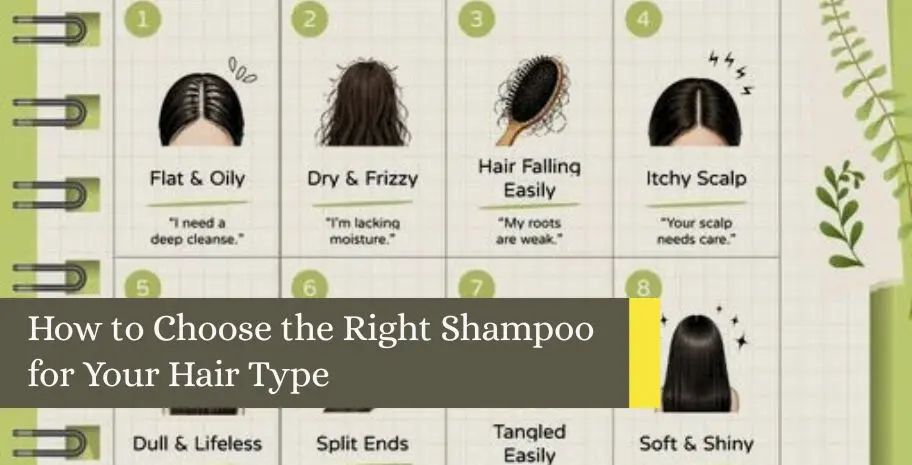
- Choose shampoo mainly according to how your scalp behaves, while also considering your hair texture, damage level and washing routine.
- Oily roots and dry ends can occur at the same time. Heat, humidity, sweating, chemical treatments and washing habits may all affect how quickly your scalp and hair feel oily or dry.
- Sulphate-free, natural or expensive shampoos are not automatically better.
- Focus shampoo mainly on the scalp. Use conditioner, masks and leave-in products to care for the mid-lengths and ends.
- Unless a shampoo causes irritation, using it consistently for a few washes can make it easier to judge its effect.
Shampoo shopping can feel unnecessarily complicated. One bottle says “moisturising,” another promises “volume,” while another claims to fix hair fall, dandruff, frizz and damage all at once.
All 3-in-1, lovely.
You may also have oily roots but dry ends, which makes choosing one product even more confusing. Add Malaysia’s heat, humidity, sweat and frequent washing into the mix, and it feels like no shampoo really works.
The good news is that you do not need to memorise every ingredient on the label. You just need to match the right shampoo for your hair.
Should You Choose Shampoo Based on Your Scalp or Hair Type?
Your scalp produces sebum (natural oil) which can build up alongside sweat, dead skin cells and styling products. Shampoo is designed to remove this buildup and keep the scalp feeling clean and comfortable.
Your hair lengths, however, may have very different needs.
For example, you might have:
- An oily scalp with dry, bleached ends
- A sensitive scalp with thick, frizzy hair
- A balanced scalp with fine, flat hair
- A flaky scalp with curly or coarse hair
Different scalp, with different hair, hence why choosing scalp tonics based only on labels such as “dry hair” or “oily hair” can be misleading.
As such, always:
- Choose shampoo for your scalp.
- Choose conditioner and treatments for your hair lengths.
- Adjust both according to damage, styling habits and wash frequency.
A Simple Shampoo Matching Guide
| Your main concern | What to look for |
|---|---|
| Oily scalp and fine hair | Lightweight, effective cleanser |
| Oily scalp and dry ends | Scalp-focused shampoo with conditioner on the lengths |
| Dry or sensitive scalp | Gentle, soothing shampoo with minimal fragrance |
| Flat hair | Lightweight or volumising formula |
| Thick or frizzy hair | Gentle cleansing with richer conditioning |
| Curly or wavy hair | Mild shampoo that does not leave hair stripped |
| Coloured or bleached hair | Colour-friendly, gentle cleansing formula |
| Product buildup | Occasional clarifying shampoo |
| Persistent dandruff | Targeted anti-dandruff shampoo used as directed |
What Is Your Scalp Type?
Before buying another shampoo of Watson or Aeon, think about how your scalp behaves between washes.
Oily scalp
Your scalp may be oily if your roots look greasy within a day, your hair feels flat quickly or you rely heavily on dry shampoo.
Look for:
- Lightweight cleansing formulas
- Shampoos designed for oily scalps
- Ingredients that help remove excess oil and residue
- Clarifying shampoos for occasional buildup
Avoid choosing an extremely harsh shampoo just because your scalp gets greasy. Over-cleansing can make your scalp feel tight or irritated, while your ends become rougher.
Dry scalp
A dry scalp may feel tight, uncomfortable or mildly flaky, especially after washing.
Look for:
- Gentle cleansing formulas
- Moisturising or soothing ingredients
- Shampoos suitable for sensitive or dry scalps
- Fragrance-free options if your scalp reacts easily
Be careful not to confuse a dry scalp with dandruff. Dry flakes are often small and powdery, while dandruff may appear oilier, larger or accompanied by more persistent itching.
Sensitive scalp
A sensitive scalp may sting, itch or turn uncomfortable after using strongly fragranced shampoos or harsh cleansers.
Look for:
- Mild surfactants
- Minimal fragrance
- Simple formulas
- Shampoos made for sensitive scalps
If irritation continues even after changing products, it is worth speaking with a dermatologist rather than testing shampoo after shampoo.
Flaky or dandruff-prone scalp
If your scalp has persistent flakes, itchiness or oily scaling, a regular shampoo may not be enough.
Look for:
- Anti-dandruff shampoos
- Clearly labelled active ingredients
- Instructions that explain how long the product should stay on the scalp
- Formulas suitable for your wash frequency
Apply anti-dandruff shampoo mainly to the scalp. If your lengths are dry, follow with conditioner from the mid-lengths to the ends.
Balanced scalp
If your scalp feels clean for a few days without becoming overly oily, dry or itchy, you likely have a relatively balanced scalp.
Look for:
- Gentle everyday shampoos
- Lightweight formulas
- Products that match your hair texture and styling routine
You do not need a highly specialised shampoo if your scalp is already comfortable.
How Does Hair Texture Affect Shampoo Choice?
Once you understand your scalp, let’s look at your hair strands or some statistics.
An International Journal of Trichology 2017 study examined 240 Malaysian medical undergraduates aged 17–19: 120 male and 120 female students.
The female subgroup included 40 Malay, 40 Chinese and 40 Indian participants. Among the female participants, the study reported:
- Dry and rough hair in 45% of Malay women
- Silky hair in 35% of Chinese women
- Silky hair in 35% of Malay women
- Silky hair in 32.5% of Indian women
- Split ends and breakage in 25% of Indian women
- Split ends and breakage in 17.5% of Chinese women
- Split ends and breakage in 10% of Malay women
However, this was a small sample of young medical students from one educational setting, not a nationally representative survey. The findings should not be treated as estimates for all Malaysian women or ethnic groups, but it's useful data to differentiate the diversity of hair types.
Fine hair
Fine hair can become flat or greasy easily because heavy ingredients weigh it down.
Look for:
- Lightweight shampoos
- Volumising formulas
- Minimal heavy oils or butters
- Products that rinse cleanly
Use conditioner sparingly and keep it away from the roots.
Thick or coarse hair
Thicker strands often need more softness and slip, especially if they feel rough or frizzy.
Look for:
- Gentle cleansing formulas
- Smoothing or moisturising shampoos
- Ingredients that reduce roughness
- Richer conditioners and masks for the lengths
The shampoo does not need to make the hair feel coated. Much of the softness should come from your conditioner.
Straight hair
Straight hair tends to show oiliness quickly because sebum can travel down the strand more easily. Sweat and humidity can make the roots appear greasy or flat sooner than expected, even when the hair was washed recently.
Look for:
- Lightweight cleansers
- Formulas that match your scalp oil level
- Occasional clarifying shampoo if you use styling products
Avoid overly rich formulas if your hair becomes flat soon after washing.
Wavy or curly hair
Wavy and curly hair can feel drier because natural oils do not move down the bends of the strand as easily.
Look for:
- Gentle or lower-foaming shampoos
- Moisturising formulas
- Products that do not leave the hair feeling squeaky or stripped
Focus the shampoo on your scalp and allow the lather to run through the lengths as you rinse. If you wear a hijab, exercise often or wash your hair frequently, a gentle shampoo can help keep the scalp fresh without making the curls or waves feel overly dry.
How Should You Choose Shampoo for Coloured or Damaged Hair?
Colouring, bleaching, rebonding, perming and frequent heat styling can make hair more porous, rough and prone to breakage.
Look for:
- Gentle cleansing formulas
- Shampoos made for colour-treated hair
- Smoothing or strengthening ingredients
- Products that do not leave the hair feeling tangled after rinsing
Gentle Reminder: Shampoo cannot permanently repair structural damage. It can help hair feel smoother and reduce further roughness, but damaged hair usually also needs conditioner, masks and leave-in products.
Try not to judge a shampoo solely by how soft your hair feels while it is still wet. Some very rich formulas can leave buildup that makes hair heavy over time.
Is Sulphate-Free Shampoo Better?
Not always and it’s a trap touted by online influencers or beauty gurus.
Sulphates are cleansing ingredients that remove oil and residue. Some can feel too strong for dry, sensitive or heavily damaged hair, but they are not always harmful.
A sulphate-free shampoo may be useful if:
- Your scalp is sensitive
- Your hair is very dry or curly
- You colour your hair frequently
- You wash your hair often
- Strong shampoos leave your scalp tight
A conventional shampoo may still suit you if:
- Your scalp gets oily quickly
- You use heavy styling products
- You need more effective cleansing
- Your scalp feels comfortable after washing
The better question is not “Does it contain sulphates?” rather you should ask “Does this shampoo clean my scalp without causing irritation or excessive dryness?”
If the answer is yes, then go ahead!
Fact of the day: Of the 1,577 notified cosmetics tested by Malaysia’s NPRA in 2024, 39 products, or 2.5%, failed specifications. The regulator also ordered recalls involving 22 notified cosmetics.
How Often Should You Clarify Your Hair?
Clarifying shampoo removes heavier buildup from oil, silicones, styling products and minerals.
You may need it if:
- Your hair feels coated or unusually heavy
- Your shampoo no longer seems to lather well
- Your roots stay greasy immediately after washing
- You use dry shampoo, hairspray or styling creams often
- Your curls or waves lose their usual shape
Clarifying shampoo is usually not needed for every wash. Depending on your routine, once every few weeks may be enough.
If your hair is coloured, bleached or very dry, use clarifying products carefully and follow with a good conditioner.
How Can You Tell If a Shampoo Suits You?
We know it is tempting to judge a shampoo after just one wash, especially if your hair feels unusually soft, flat or dry. But one wash does not always tell the full story.
Try using the shampoo for several washes while keeping the rest of your routine mostly the same. Then check how your scalp and hair respond.
1. Does your scalp feel comfortable?
After washing, your scalp should feel clean and fresh, not tight, itchy, sore or irritated.

You can try our KA’FEN Lazy Shampoo for conditioning and washing from the root.
2. How quickly do your roots become oily?
Pay attention to how long your scalp stays comfortable before your roots begin to look greasy again. A suitable shampoo should cleanse well without making you feel like you need another wash almost immediately.

This is what KA’FEN Ginger Hair Shampoo and Conditioner can offer you.
3. How do your hair lengths feel?
Your hair should not feel excessively rough, tangled or squeaky after rinsing. A little texture is normal, but your lengths should still feel manageable once you apply conditioner.

You can explore the KA'FEN Impression Series to give your beautiful long hair a new impression!
4. Does your hair feel heavy or coated?
If your hair feels sticky, unusually flat or coated with residue, the formula may be too rich or may not be rinsing out well enough.

For oily scalp and flat hair, try KA’FEN Herbal Shampoo
5. Are your flakes improving?
If you are dealing with flaking, notice whether it improves, stays the same or becomes worse. Persistent or worsening flakes may mean you need a more targeted formula or professional advice.

KA’FEN Kailor Shampoo Series is the ideal solution to remove dandruff from your hair.
When Should You See a Dermatologist?
Sometimes, the answer is not another shampoo. It may be time to speak with a dermatologist if you notice:
- Severe or persistent itching
- Red, sore or inflamed areas
- Thick scaling
- Sudden or excessive hair shedding
- Bald patches
- Scalp pain
- Flaking that does not improve with suitable care
These signs may point to a scalp or hair condition that needs proper assessment rather than another round of trial and error with shampoos.
It is also worth being cautious with cosmetic advertisements that promise to regrow hair or treat medical conditions. In 2024, Malaysia’s NPRA found that 31% of the 1,226 cosmetic advertisements it screened were non-compliant, including ads that used prohibited or unsupported medical claims.
So, if a shampoo sounds a little too miraculous, it probably deserves a closer look or maybe ignoring it altogether.
Conclusion
Choosing the right shampoo becomes much easier when you stop trying to fit your entire head of hair into one label.
Start with your scalp, then consider your strand thickness, texture, damage level and daily routine. Your shampoo should cleanse comfortably, while your conditioner and treatments support the lengths.
We know it can take a little trial and error. But once you understand what your scalp and hair actually need, you can stop chasing every new trend and build a routine that feels much more manageable.
From frizzy, to dry or oily hair, KA’FEN’s range of shampoo for all hair types can offer the solution you need to keep your hair and scalp healthy again.
Disclaimer: This article provides general hair-care information and is not a substitute for diagnosis or treatment by a qualified healthcare professional.
Frequently Asked Questions
How Do I Know What Shampoo Is Right for My Hair?
Choose shampoo according to your scalp oiliness, sensitivity and buildup level. Then consider your hair texture, damage and wash frequency.
Can I Use Shampoo for Dry Hair If My Scalp Is Oily?
You can, but it may feel too heavy. A lightweight scalp cleanser with conditioner on the dry ends often works better.
Is It Bad to Change Shampoo Frequently?
Not necessarily, but changing too often makes it difficult to tell what is working. Give each shampoo several consistent washes unless it causes irritation.
How Often Should I Wash Oily Hair?
Wash whenever your scalp feels oily, sweaty or uncomfortable. Some people may need daily or alternate-day washing with a gentle formula.
Should Shampoo Be Applied to the Ends?
Focus shampoo on the scalp. The rinsing lather is usually enough to clean the lengths without scrubbing them directly.
Can Shampoo Repair Damaged Hair?
Shampoo can improve how damaged hair feels, but it cannot permanently reverse structural damage. Conditioner, masks, leave-in care and regular trims are also important.