

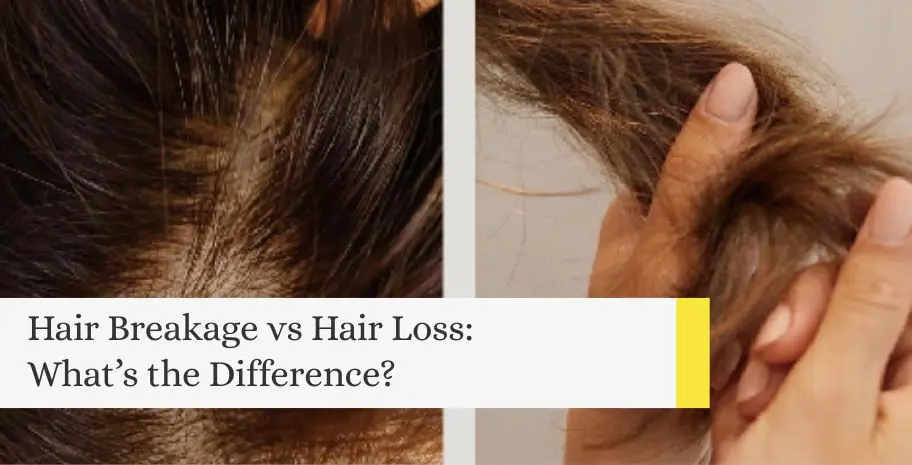
Key Takeaways
- Hair breakage happens when a strand snaps somewhere along the hair shaft.
- Hair shedding happens when a complete strand is released from the scalp as part of the hair-growth cycle.
- Progressive hair loss may appear as a widening part, receding hairline, bald patches or reduced overall density.
- Heat, bleaching, rebonding, friction and tight hairstyles can contribute to breakage.
- Persistent, sudden or patchy hair loss should be assessed by a doctor or dermatologist.
You finish washing your hair, look down at the bathroom floor and suddenly notice more strands than usual. Later, you find a few more on your pillow, your hairbrush and the back of your shirt.
All of this sounds unsettling and immediately, you assume the worst: “Am I losing my hair?”
Before you panic, let’s take a look at what’s really going on.
“Hair breakage affects the visible strand itself while hair loss involves what is happening at the scalp or within the hair follicle.”
Understanding the difference helps you choose a more suitable response instead of reaching for the first bottle labelled "anti-hairloss." So let’s begin.
Hair Breakage vs Hair Loss at a Glance
| Sign | Hair breakage | Hair shedding |
|---|---|---|
| What happens | Strand snaps along its length | Complete strand is released |
| Strand appearance | Often short, uneven or frayed | Usually a complete strand |
| Scalp visibility | Usually unchanged at first | May look temporarily less full |
| Common pattern | Frizz, split ends and uneven length | Increased strands throughout the day |
| Common triggers | Heat, bleach, rebonding and friction | Stress, illness, childbirth or weight change |
| Best next step | Reduce damage and improve conditioning | Observe the timeline and possible triggers |
What Is Hair Breakage?
Hair breakage occurs when part of the strand snaps off before it would naturally shed from the scalp.
The visible part of your hair is called the hair shaft. Although it can be conditioned and protected, it is not living tissue and cannot heal itself in the way skin does.
Once the shaft becomes severely weakened, it is more likely to split, fray or break.
You may be dealing with breakage when you notice:
- Short pieces of hair around the sink, pillow or clothing
- Uneven lengths throughout your hair
- Split or frayed ends
- Increased tangling
- Rough or straw-like texture
- Frizz concentrated around the crown or mid-lengths
- Hair that seems unable to grow beyond a certain length
Breakage can sometimes make hair look thinner even when the follicles are still producing strands normally. The hair is growing, but some strands are snapping before they can become longer.
What Is Hair Loss?
Hair loss is a broader term describing a reduction in the amount or density of hair growing from the scalp.
Depending on the cause, it may appear as:
- A gradually widening hair part
- A receding hairline
- Thinning around the crown
- Reduced density across the scalp
- Distinct bald or sparse patches
- A ponytail that feels noticeably smaller
- More visible scalp than before
Some forms of hair loss develop gradually, while others can appear suddenly. There are many causes for this such as genetics, hormonal changes and even illnesses.
Because different types of hair loss require different approaches, a product that helps reduce breakage cannot automatically treat a problem affecting the follicle.
Hair Shedding Is Not Always the Same as Hair Loss
Seeing complete strands fall from the scalp does not necessarily mean you are developing permanent hair loss.
Hair naturally passes through growth, transition and resting phases. At the end of the resting phase, a strand is released so another growth cycle can begin, it’s a cycle really.
Scalp hair grows by an average of approximately 1 cm per month, although the actual rate varies between individuals but that’s the general rule of thumb.
How Much Does Scalp Hair Grow Over Time?
| Time | Approximate New Hair Growth |
|---|---|
| 1 month | 1 cm |
| 3 months | 3 cm |
| 6 months | 6 cm |
| 9 months | 9 cm |
| 12 months | 12 cm |
| 18 months | 18 cm |
| 24 months | 24 cm |
Note, these figures are only general estimates. Scalp hair may grow between roughly 0.6 and 1.4 cm per month, with about 1 cm being a useful average.
Even when the cause of temporary shedding has settled and new hair is growing, it may take several months before the shorter regrowth becomes noticeable or contributes meaningfully to overall volume.
The American Academy of Dermatology states that losing around 50 to 100 hairs per day can be normal. However, people may temporarily shed more after:
- Childbirth
- Stress
- High fever
- Surgery
- Illness or substantial weight loss.
This excessive shedding is known as telogen effluvium and may become noticeable a few months after the triggering event.
For example, you may feel that your hair is suddenly “dropping everywhere” after recovering from an illness or going through an especially stressful period.
This can be frightening, but it is not necessarily the same as progressive pattern hair loss.
Try the 4P Hair Check
You do not need to count every strand that falls from your head. Instead, use these four observations to build a clearer picture.
Pieces
Are you finding short, uneven fragments, or mostly complete strands?
Short pieces of different lengths are more suggestive of breakage. Complete strands may be normal shedding, excessive shedding or hair loss, depending on the wider pattern.
Do not rely entirely on whether you see a small white end on the strand. This is often club-shaped keratin from a naturally shed hair, not the entire follicle being pulled from your scalp.
Pattern
Look at your hair as a whole rather than focusing only on what appears in the shower drain.
- Is your hair breaking mainly around the front, crown or ends?
- Is your centre part becoming wider?
- Are there clearly defined patches?
- Does your hairline look different from photographs taken a year ago?
A visible change in scalp coverage really helps you gauge and compare.
Progression
Observe if the condition is staying the same, improving or becoming steadily more noticeable.
Breakage may improve after reducing heat and chemical treatments, so perhaps a change of methods was all you need.
Gradual density hair loss deserves closer attention.
Taking clear photographs of your hairline once every few weeks may be more useful than checking the mirror several times a day. Seriously, we know the feeling but nothing will change in the span of a few hours..
Provocation
This requires you to think about what happened before the hair problem starts.
Possible breakage-related triggers include:
- Recent bleaching or repeated colouring
- Chemical straightening or rebonding
- Daily use of straighteners or curling tools
- Brushing aggressively through tangles
- Frequently tying wet hair
- Wearing very tight ponytails, braids or buns
Do note that excessive shedding may only become obvious a few months after the event, which is why if you make any major changes to your hair, you have to make a mental note of observation.
Why Hair Breakage Is Common in Malaysia
Malaysia’s weather and environment can make haircare more complicated, mainly due to the heat and humidity.
- Hot and humid weather
- More sweating and scalp oil
- More frequent washing and friction
- Drier lengths, tangling and possible breakage
For some people, this creates an oily-scalp-and-dry-ends combination. The scalp may feel greasy by the end of the day, while chemically treated lengths remain rough and tangled.
Other common contributors include:
- Frequent blow-drying before work or social events
- Tying up damp hair in hot weather
- Friction from helmets, caps or head coverings
- Tight hairstyles worn for long periods
- Aggressive washing to remove sweat and oil
- Skipping conditioner because the scalp already feels oily
Special note for Hijab Wearers: Tying damp hair too tightly or wearing the same bun position every day can also contribute to friction, tension and breakage. We recommend that you allow your hair to dry before covering it, choosing softer inner materials and alternating between looser hairstyles that keep the hair more comfortable and manageable.
Can Damaged Hair Be Repaired?
Yes they can, haircare products can make damaged hair feel smoother, softer and easier to manage. They can also reduce friction or further breakage.
That said, severely split or broken hair cannot be permanently restored to its untouched condition. Hair products work by conditioning or temporarily reinforcing the strand and it’s not a magic bullet to the problem.
Our recommendation: If your hair is feeling dry, fragile or damaged, try using a moisturising conditioner after shampooing. It helps coat the strands, improve softness and reduce the friction that can lead to breakage and split ends.
A leave-in conditioner or detangler can also make knots easier to manage while helping to control frizz.
What to Do If Your Hair Is Breaking
Start by making your routine gentler rather than adding several intensive treatments at once.
1. Use a Gentle Shampoo
Focus shampoo on the scalp, where sweat, oil and product buildup tend to collect. Avoid vigorously rubbing the lengths together, as this can create unnecessary friction.
Let the lather move through the ends as you rinse.
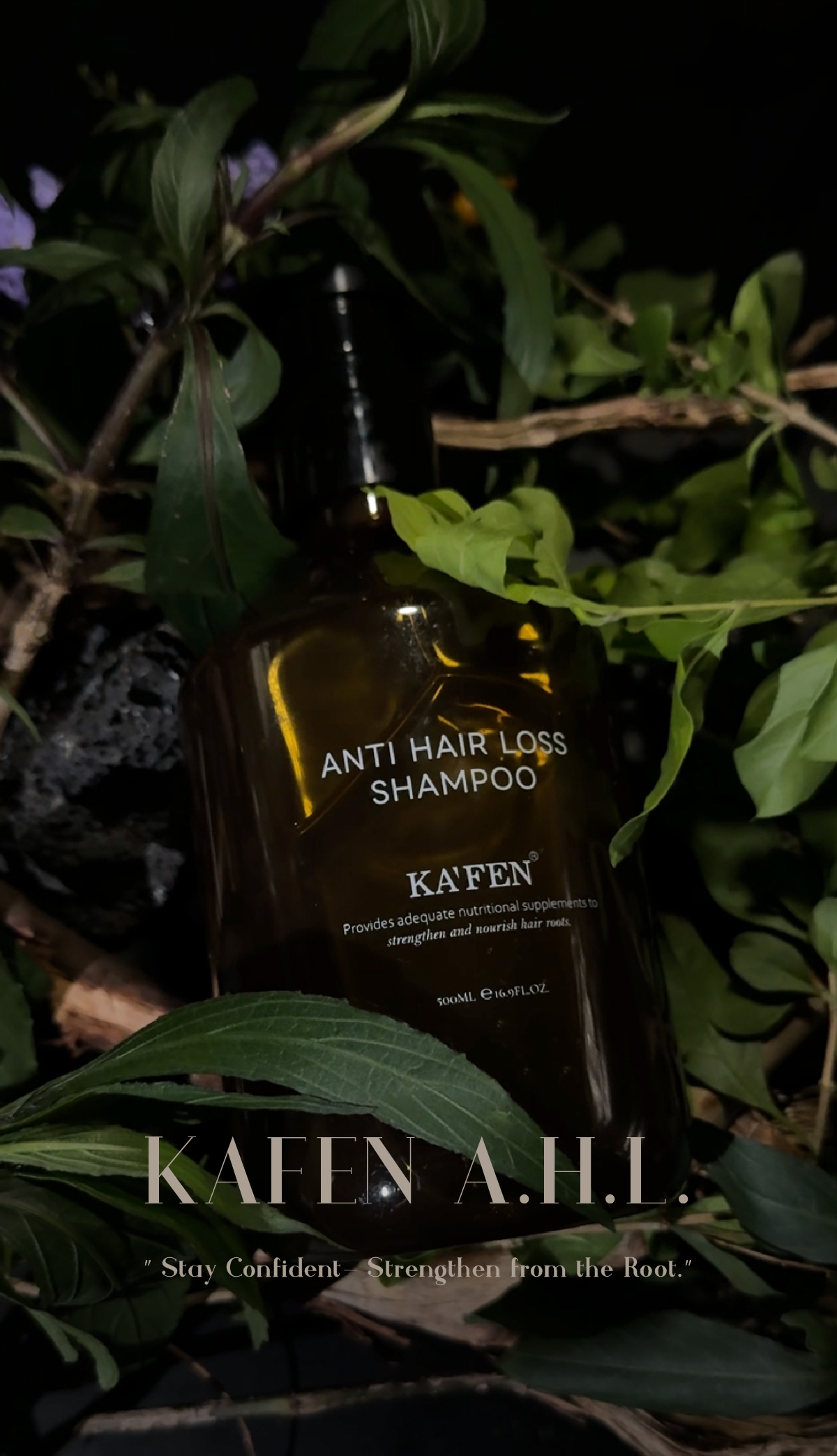
We recommend using KA’FEN’s Anti Hair Loss Shampoo, formulated to reduce abnormal hair loss and Argan Oil for Hair to repair damaged hair.

2. Condition the Mid-Lengths and Ends
Even when your scalp becomes oily quickly, your ends may still need conditioning.
Apply conditioner mainly from the mid-lengths down. Give extra attention to sections that feel rough, tangle easily or have been chemically treated.
3. Detangle Slowly
Begin at the ends and slowly move upwards. Pulling a brush from the roots straight through a knot can place significant tension on fragile strands.
A wide-tooth comb or detangling brush may help, depending on your hair texture.
4. Reduce Direct Heat
Try using a lower temperature and avoid repeatedly passing a straightener over the same section.
Apply a heat-protective product before styling, and allow hair to partially air-dry when practical.
5. Be Careful With Wet Hair
Wet hair can stretch and break more easily when handled roughly.
Avoid scrubbing it with a towel. Instead, gently squeeze out excess water using a soft towel or cotton T-shirt.
6. Alternate Your Hairstyles
Wearing the same tight ponytail, bun or parting every day places repeated stress on the same areas.
Try rotating between gentler styles such as:
- A loose low ponytail
- A relaxed low bun
- A loose braid
- Half-up, half-down hair
- Hair worn down when practical
- A claw-clip twist that does not pull tightly
- Different parting positions throughout the week
Hairstyles that repeatedly pull on the scalp can contribute to traction alopecia, a form of hair loss caused by prolonged tension.
See a Dermatologist If You Have the Following Symptoms
Hair loss can be a delicate and frustrating concern, hence, consider speaking with a dermatologist if you notice:
- Sudden or severe hair shedding
- A receding hairline
- Hair loss that continues to worsen over several months
- Scalp pain, burning, redness or persistent itching
- Flaking, sores or signs of inflammation
- Hair loss affecting the eyebrows or eyelashes
- Shedding that begins after starting a new medication or experiencing a major health change
A dermatologist can examine your scalp and help determine the cause of the problem.
“Getting the right assessment early may help you avoid spending money on products that are not suited to the actual cause”
Please Be Careful With “Hair Growth” Claims
When we feel anxious about our hair, promises of instant regrowth can be very tempting. But we heavily advise caution.
In Malaysia, cosmetic claims are regulated by the National Pharmaceutical Regulatory Agency.
Its cosmetic claims guideline specifically lists the following as unacceptable claims for ordinary hair and scalp cosmetics.
| More Acceptable Cosmetic Claims | Unacceptable or High-Risk Hair Growth Claims |
|---|---|
| Helps reduce hair fall caused by physical breakage | Hair loss can be arrested or reversed |
| Helps reduce breakage | Hereditary or hormonal hair loss can be treated |
| Improves manageability | Baldness or alopecia can be treated |
| Helps strengthen the feel of fragile hair | Hair cells can be restored |
| Helps minimise tangling | Hair growth can be stimulated or promoted |
| Adds temporary volume and body | Permanently stops hair loss |
| Supports softer, smoother-looking hair | Guarantees new hair growth |
Acceptable cosmetic claims should focus on the hair’s appearance, feel, manageability or protection from breakage. Claims that suggest treatment of alopecia, hereditary hair loss or changes to follicle activity may be considered medicinal rather than cosmetic.
Give Your Hair the Care It Actually Needs
Short, frayed pieces usually point to breakage, while full-length strands may be temporary shedding. Start by looking at the pieces, pattern, progression and possible triggers. For dry or fragile hair, gentle cleansing, regular conditioning and less heat can help protect your length.
Your daily hair care routine will never look the same again with our authentic KA’FEN Argan Oil for Hair that deeply moisturizes your hair without feeling greasy. While our Anti Hair Loss Shampoo gives you stronger and healthier hair roots.
Frequently Asked Questions About Hair Breakage vs Hair Loss
How can I tell whether my hair is breaking or falling from the root?
Hair breakage usually leaves shorter, uneven pieces with frayed or split ends. Hair released from the scalp is often closer to its full length. Also check whether your scalp density, parting or hairline has visibly changed.
Does a white bulb mean I have hair loss?
Not necessarily. A small pale end is often club-shaped keratin attached to a naturally shed strand. It does not mean the entire follicle has been pulled out, and it cannot diagnose a hair-loss condition by itself.
Can hair breakage make my hair look thinner?
Yes. Repeated breakage can reduce the fullness of the mid-lengths and ends, create uneven sections and stop hair from appearing to gain length. However, the scalp may not become more visible unless there is also shedding or follicular hair loss.
How much hair shedding is normal?
The American Academy of Dermatology states that shedding approximately 50 to 100 hairs daily can be normal. The amount you notice at once may vary depending on your hair length, washing frequency and brushing routine.
Can anti-hair-fall shampoo stop hair loss?
It depends on what “hair fall” means. A well-formulated shampoo may support gentle cleansing or help reduce breakage caused by physical damage. It cannot be assumed to treat genetic, autoimmune, hormonal or other medically related forms of hair loss.
When should I see a doctor about hair loss?
Seek professional advice if the loss is sudden, patchy, painful, inflamed or steadily worsening. A widening part, receding hairline, smooth bald patches, eyebrow loss or continuing reduction in density also deserves medical assessment.