
Ever washed your hair, only to find it looking flat, greasy or strangely heavy by lunchtime?
You might have heard someone say: "It's probably the silicones in your shampoo!"
And suddenly, you're inspecting every shampoo bottle at Watsons like you're investigating a crime scene. 🔍
But here's the thing.
Silicones aren't necessarily bad for your hair! In fact, they're a popular ingredient among hair care products in Malaysia, helping create that silky-smooth, glossy finish we all love! (☆▽☆)
So, do silicones really clog your hair? Should you avoid them completely? Are the Tiktok beauty gurus correct? Let's untangle the truth!
Do Silicones Really Clog Your Hair?
Nope! Silicones do not literally clog your hair strands.
Unlike your scalp, hair strands don't have pores that can become clogged. However, certain silicones can leave residue on the hair's surface, especially when products are used frequently without effective cleansing.
Sounds pretty good, right? Well, it can be! (o゚v゚)ノ
The concern starts when too much product accumulates, leaving your hair feeling heavy, dull or difficult to manage.
That's called product buildup, which is different from your hair being clogged.
What Are Silicones in Hair Products?
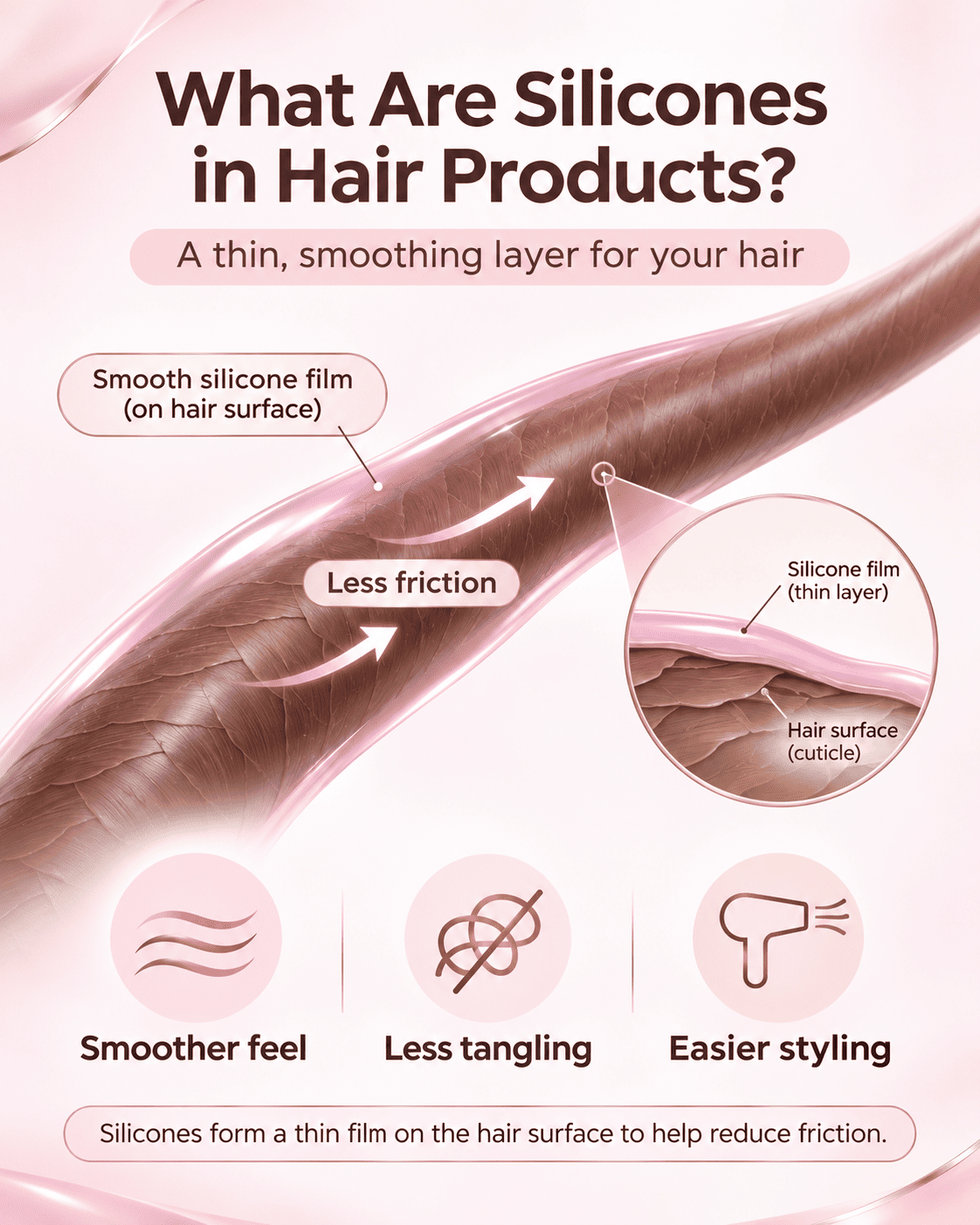
Silicones are synthetic ingredients commonly used in shampoos, conditioners, hair masks, serums and styling products.
Their purpose is to make your hair feel smoother, softer and easier to manage.
You know that lovely feeling when you run your fingers through freshly conditioned hair without encountering a single stubborn knot? Silicones can help create that effect! ✨
They work by forming a thin film over the hair's surface, helping to reduce friction between strands.
Why Do Haircare Brands Use Silicones?
Silicones offer several cosmetic benefits.
Benefit | How It Helps Your Hair |
Smoothness | Makes hair feel softer and silkier |
Shine | Helps create a smoother, glossier surface |
Frizz Control | Helps reduce unwanted frizz |
Detangling | Reduces friction between hair strands |
Manageability | Makes brushing and styling easier |
Are All Silicones the Same?
Not quite! Different silicones have different properties, including how they spread, attach to hair and respond to cleansing.
Some are water-soluble, while others are water-insoluble.
Here's a simple breakdown.
Silicone Type | Common Ingredients | What to Know |
Water-soluble | PEG-12 Dimethicone, Dimethicone Copolyol | Generally easier to rinse away |
Water-insoluble | Dimethicone, Dimethiconol | May require shampoo for effective removal |
Amino-functional | Amodimethicone | Designed to condition hair, particularly damaged areas |
Volatile | Cyclopentasiloxane | Spreads easily and gradually evaporates |
Note: The behaviour of a silicone also depends on its concentration and the overall product formulation.
How Can You Identify Silicones in Shampoo?
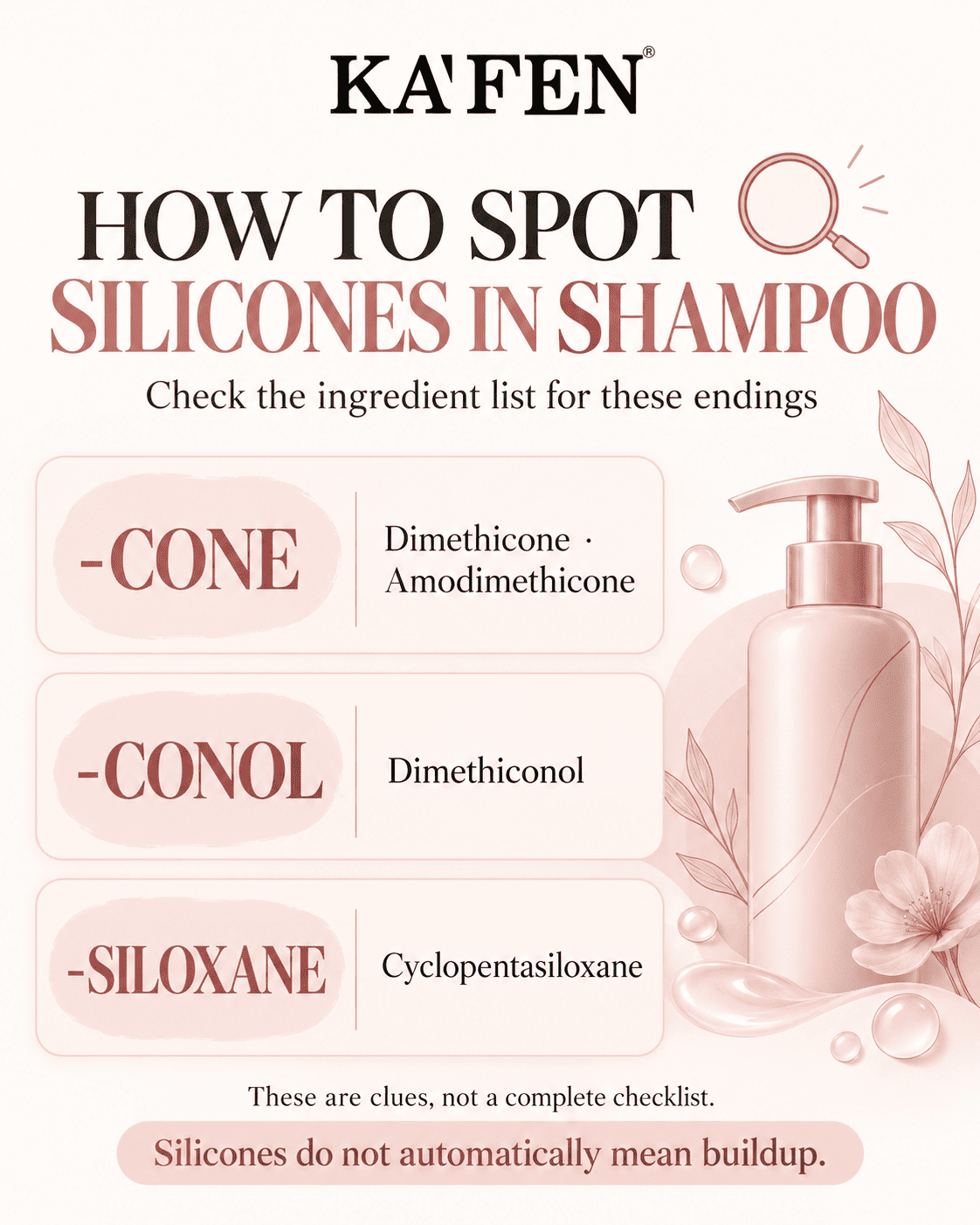
Here's a little shopping trick! 🛍️
Some silicone-related ingredients also contain names such as silicone copolymer.
However, these naming patterns are only clues, not a complete identification method.
And remember, seeing a silicone on an ingredient list doesn't automatically mean the product will cause buildup. (✿◡‿◡)
What Are the Benefits of Silicones for Your Hair?
Before you throw away every silicone-containing product in your bathroom, let's give these ingredients a fair hearing!
Silicones can be genuinely useful, especially for managing everyday hair concerns.
1. They Help Reduce Frizz
Ah, Malaysian humidity. Great for tropical plants, not always so great for our hairstyles. 🌴
But silicones can help reduce the effects of humidity by forming a coating that slows moisture movement into and out of the hair.
This may help keep strands smoother and more manageable.
However, they won't completely eliminate frizz, especially if your hair is naturally curly, porous or damaged.
2. They Make Hair Easier to Detangle
Ever tried brushing through tangled hair after a long day? We all have been there. ( T﹏T )
Silicones help reduce friction between individual hair strands, making them easier to separate.
Less friction can mean:
- Easier combing.
- Fewer stubborn tangles.
- Less pulling during brushing.
- Reduced friction-related breakage.
This can be very useful for long, dry or chemically treated hair.
3. They Make Hair Look Shinier
Healthy-looking hair often reflects light more evenly.
When the outer surface of your hair becomes rough or damaged, it may appear dull.
Silicones can smooth the hair's surface, helping it reflect light more consistently.
The result? Hair that looks glossier, smoother and more polished, woohoo!
What About Silicone Buildup on Hair?
Alright, so we have sung praises, let’s address the elephant in the room. 🐘
Silicone buildup happens when residue from silicone-containing products accumulates on your hair faster than it is removed through cleansing.
- Imagine applying a little argan oil every morning.
- Then a conditioning mask.
- Then another smoothing product before heading out.
Individually, these products might work beautifully.
But when several leave-on or conditioning products are layered repeatedly, your hair may start feeling weighed down.
And silicones aren't the only possible culprits!
Natural oils, waxes, styling polymers and other conditioning ingredients can also contribute to product residue.
What Are the Signs of Silicone Buildup?
There isn't one specific symptom that confirms silicone buildup.
However, excessive product residue may contribute to the following changes.
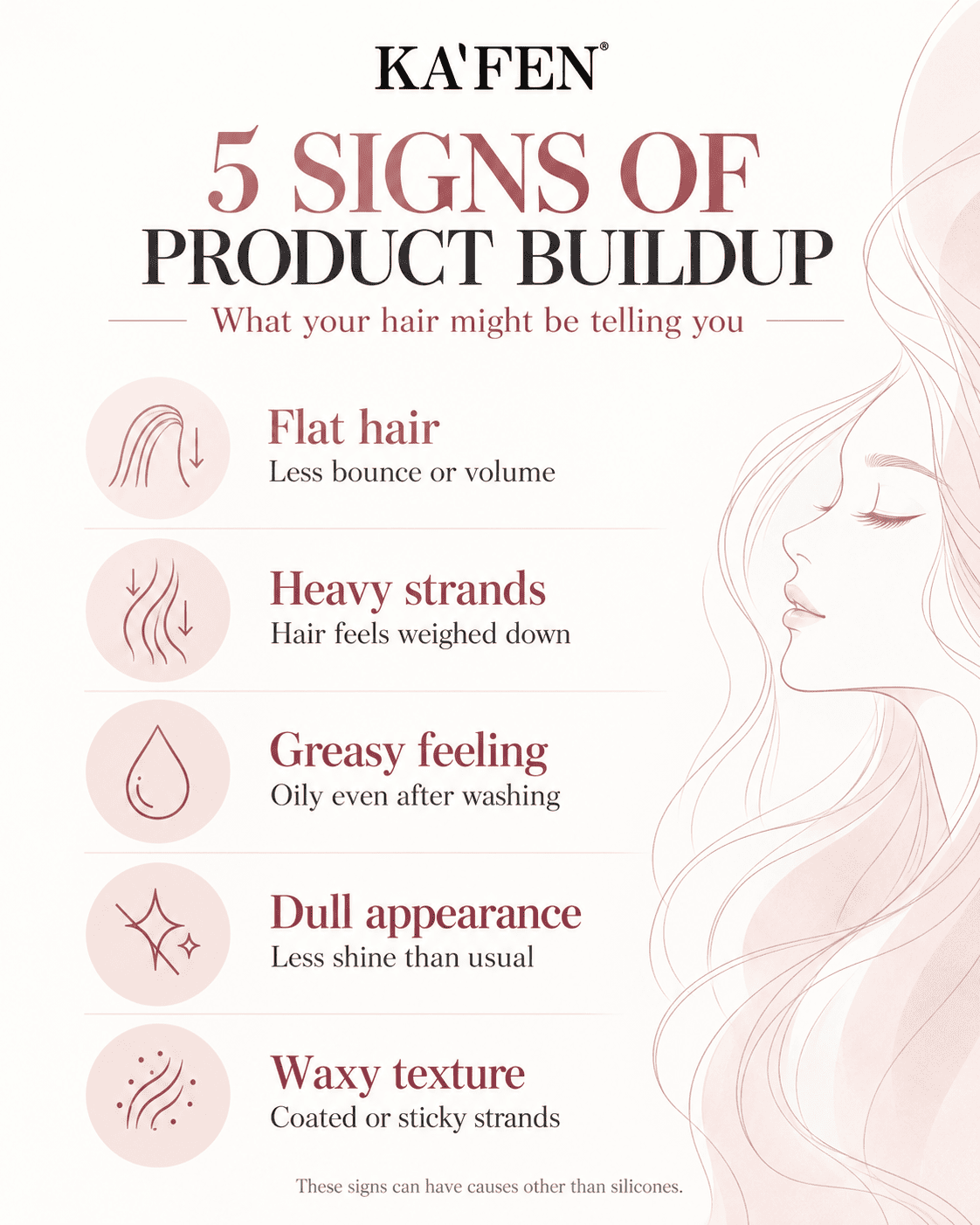
Here's the catch!
These symptoms can also result from excess scalp oil, inadequate rinsing, styling products or unsuitable conditioners.
So, if your hair suddenly feels different, don't immediately blame silicones! (though they are easy to blame)
Should You Choose Silicone-Free Shampoo Instead?
It depends on your hair type and what you're hoping to achieve.
And you're certainly not alone in questioning silicones!🔬
According to a GlobalData consumer survey, 32% of Asia-Pacific consumers actively looked for silicone-free beauty and grooming products in 2019.
Clearly, silicone-free haircare has been attracting attention for quite some time!
But!
Silicone-free shampoo isn't automatically healthier, just as silicone-containing shampoo isn't automatically damaging.
Hair Concern | What to Consider |
Fine, easily flattened hair | Lightweight or silicone-free formulations |
Dry, frizzy hair | Conditioning products that improve smoothness |
Bleached or damaged hair | Products that reduce friction and tangling |
Oily scalp | Shampoo suited to your cleansing needs |
Frequent product buildup | Effective cleansing and lighter product layering |
Okay so, When Should You Actually Make the Switch?
If your hair constantly feels heavy, flat or coated even after washing, experimenting with a lightweight or silicone-free shampoo might be worth trying.
However, if your current shampoo leaves your hair clean, soft and manageable, there's no need to change something that's already working! 💕
A little bit of silicones is a-okay. o(* ̄▽ ̄*)b
Still Looking for a Silicone-Free Shampoo? Try KA'FEN!
If you're curious about switching to silicone-free haircare, we've got a few options worth exploring!
Our Herbal Shampoo range includes Artemisia, Gentian and Paeonia Lactiflora variants, giving you choices for different hair and scalp preferences.
Whether you're dealing with oily roots, an uncomfortable scalp or hair that feels easily weighed down, you can explore the Artemisia, Gentian and Paeonia Lactiflora variants to find a suitable match.
Prefer a refreshing ginger-infused wash? Our Ginger Shampoo is another silicone-free option!
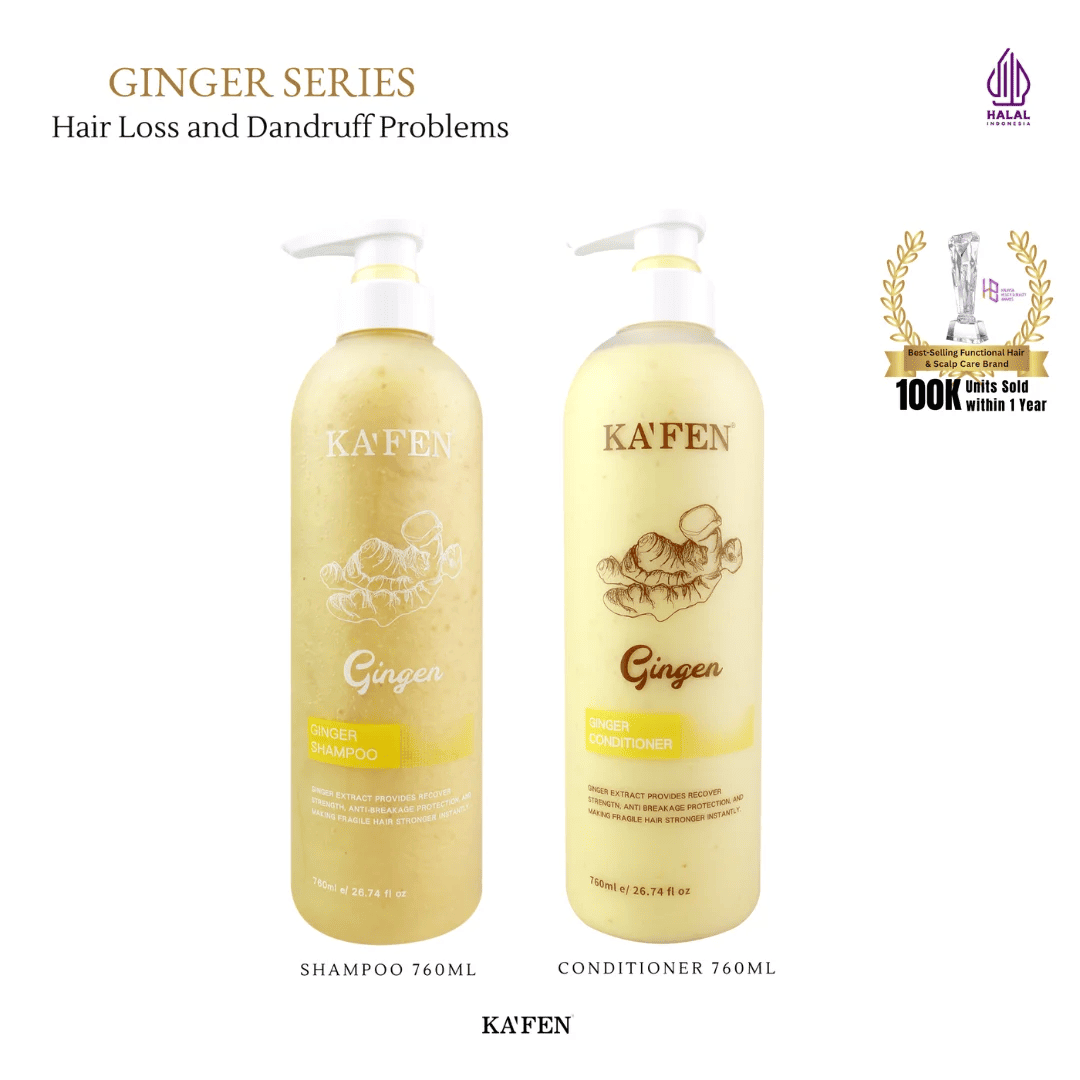
Juuuust remember, choosing silicone-free doesn't mean silicones are bad. It's simply about discovering what makes your hair feel its best!
Frequently Asked Questions About Silicones in Hair Products
Does Silicone in Shampoo Cause Hair Loss?
There is no established evidence that silicones in ordinary haircare products directly cause hair loss. Silicones mainly condition the hair's surface. Persistent shedding may be associated with genetics, hormonal changes, nutritional deficiencies or scalp conditions.
How Do I Know If I Have Silicone Buildup?
Your hair might feel heavy, flat, greasy or coated despite washing.Excess oil, other styling products and inadequate cleansing can cause similar effects.
Can Regular Shampoo Remove Silicone Buildup?
Yes, many regular shampoos can remove silicone residue because their cleansing ingredients help lift oils and product deposits from hair. However, effectiveness depends on the silicone, shampoo formulation and amount of buildup.
Is Silicone-Free Shampoo Better for Oily Hair?
Not necessarily. Some people with fine or oily hair prefer lightweight silicone-free formulas, but scalp oiliness also depends on natural sebum production and the shampoo's cleansing ingredients. Choose a formula that leaves your scalp comfortable without excessive dryness.
Are Silicones Good for Dry and Frizzy Hair?
Silicones can be helpful for dry and frizzy hair because they smooth the hair surface, reduce friction and improve manageability. However, they don't permanently repair damaged strands, so balanced conditioning and gentle haircare habits remain important.
How Often Should You Use Clarifying Shampoo?
There's no fixed schedule for everyone. Use clarifying shampoo when regular cleansing isn't adequately removing product residue. Frequency depends on your hair type, styling habits and shampoo formulation.